
Lesson details
Modelling the Atom
Alberta · Grades 9-10 · 60 minutes
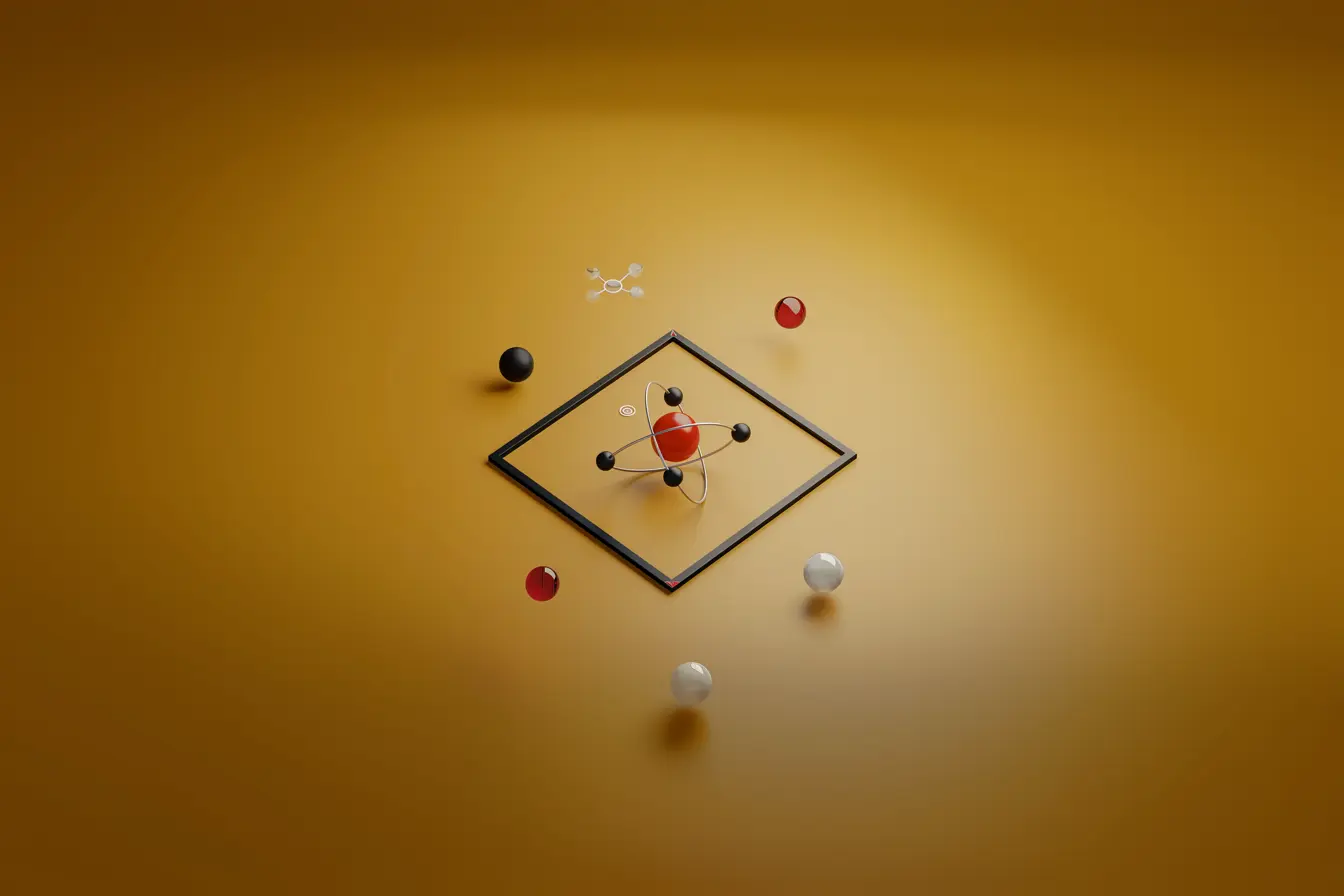
Take a look at the structure of atoms and how they have been modelled over time!
Students will be able to observe the crystal lattice structure of salt and the formation of ionic compounds as well as the models of the atom that have been used over human history. Students will also have the opportunity to construct atoms of the first 10 elements of the periodic table using their knowledge of protons, neutrons, and electrons.
Lesson facts
- Region
- Alberta
- Grades
- 9-10
- Duration
- 60 minutes
- Group size
- 15–40 students, depending on the licensee or franchisee
- Availability
- Bookable · Book this lesson
Curriculum connections
Learning objectives
- Describing Ionic Compounds: Students will recognize and describe the formation of ionic compounds and their characteristics.
- Observing Changes in Gas Particles: Students will be able to describe the effects of temperature and volume on the behavior of gas particles and the number of particle collisions.
- Identifying Models of the Atom: Students will recognize and describe some models of the atom used through history.
- Construct Atomic Models: Students will accurately construct Bohr models of the first 10 elements on the periodic table.
Alberta curriculum outcomes
Curriculum outcomes for Alberta have not yet been added.
Grades
- Grade 9
- Grade 10
Skills
- Cause and Effect
- Communication and Collaboration
- Content Mastery
- Critical Thinking
- Curiosity and Wonder
- Evidence Gathering
- Explaining and Solving
- Measurement and Data
- Pattern Recognition
- Physical Manipulation
- Scientific Inquiry
- Spatial Design
- Using Models
Activities
Characteristics of Ionic Compounds
In the microscopic context of a salt cube, students will be able to walk around and observe the structure of an ionic compound. Students can grab specific atoms and observe the actual formation of an ionic compound between chlorine and sodium atoms. A teacher-led lesson will support students in understanding what causes the formation of an ionic compound as well as the common characteristics amongst ionic compounds.
| Objective | Description |
|---|---|
| Describing Ionic Compounds | Students will recognize and describe the formation of ionic compounds and their characteristics. |
Characteristics of Gas Particles
In the particle chamber, view the behavior of particles in a gas. As the in-experience teacher changes aspects of the gas, like its temperature and volume, students will identify the observable changes in the particles, including the number of collisions.
| Objective | Description |
|---|---|
| Observing Changes in Gas Particles | Students will be able to describe the effects of temperature and volume on the behavior of gas particles and the number of particle collisions. |
Historic Models of the Atom
In the particle chamber, students will observe the action of gas particles. From these particles, students will explore the different models of an atom from the billiard ball model to the Bohr model.
| Objective | Description |
|---|---|
| Identifying Models of the Atom | Students will recognize and describe some models of the atom used through history. |
Atom Builder
Take an opportunity to manipulate subatomic particles to construct an atom in a safe environment! Students will be introduced to the structure of an atom and how to construct neutral atoms in an easy-to-learn and quick-to-master virtual environment while getting automatic and immediate feedback.
| Objective | Description |
|---|---|
| Construct Atomic Models | Students will accurately construct Bohr models of the first 10 elements on the periodic table. |
Atomic Appetite
After some practice in the Atom Builder, students will work together in small groups to build atoms once prompted by the experience. By sharing responsibilities, students can race against time - or their peers - to see how many atoms can be built accurately, gathering points by launching accurately constructed atoms into point-multiplying targets!
| Objective | Description |
|---|---|
| Construct Atomic Models | Students will accurately construct Bohr models of the first 10 elements on the periodic table. |